


The Ghost of Pretty Creek: The Story of Ben Chester White
History has a way of burying its darkest secrets in the shallowest of graves. For decades, the story of Ben Chester White was one of those secrets—a narrative of calculated cruelty meant to disappear into the mud of Mississippi. But the earth does not always keep what is hidden, and justice, while agonizingly slow, has a way of surfacing.
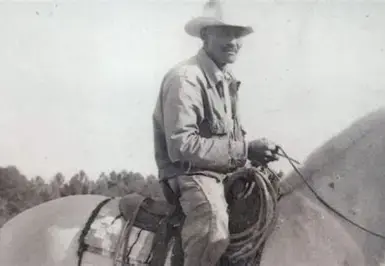
This is the story of a man whose murder was intended to be a spark for a fire that never ignited, and the family who spent a lifetime ensuring his truth would eventually burn.
Ben Chester White was a man of the land. Born in Natchez, Adams County, in 1899, he was the grandson of enslaved people. He lived his life in the same black earth his ancestors had sweated into, working as a caretaker on a local ranch. He was a man of quiet labor, tied to the soil of his home for generations.
On June 10, 1966, at sixty-seven years old, his life was violently interrupted. Three men, Claude Fuller, Ernest Avants, and James Lloyd Jones, approached him. They didn't see a man; they saw a pawn. They had a singular, monstrous objective: to lure the Reverend Dr. Martin Luther King Jr. to their corner of Mississippi by murdering a local black man, hoping to bait the civil rights leader into a trap.

They drove Ben into the Homochitto National Forest, to a place called Pretty Creek. They thought the murder would be a catalyst for their political theater, a way to lure a lion into an ambush. But the lion never came.
The murder of Ben Chester White failed to ignite the spectacle the Klan had planned. Instead, it left the three men in a humid, rotting silence. They had traded a man’s life for a prize that never walked into their snare. They returned to their lives, carrying the burden of a secret that they assumed would die with them. They were wrong.
The years that followed were a long, slow rot for the killers, and a haunting shadow for Ben’s family. The tragedy of Ben’s death was compounded by the failure of the courts. His sons fought for decades, holding yellowing legal papers like holy relics.
They did something unprecedented: they sued the Klan organization responsible for the hatred that killed their father. They won the suit, but the organization, true to its cowardice, hid its assets and claimed poverty. They had taken Ben’s life, and then they mocked his sons with their empty pockets. But the family never stopped.
The 1990s brought a shift in the political and judicial tide. The federal government finally opened the files, and the case began to stir. By 2003, the conviction of Ernest Avants finally brought a measure of legal clarity to the horror. For Ben’s sons, the verdict wasn't a celebration—it was a release. After thirty-seven years of living in the shadow of an unanswered crime, the truth was finally official.

The story of Ben Chester White is not just one of tragedy; it is a testament to the endurance of memory. The men who killed him eventually withered away, haunted by the ghost of their own failure and the persistent, quiet dignity of the family they tried to break.
Today, we remember Ben Chester White not as a pawn in a monster’s game, but as a man whose life was anchored to the land he loved, and whose story serves as a reminder: no secret is buried deep enough to escape the light of truth.
This post is dedicated to the memory of Ben Chester White and the sons who refused to let his story be washed away by the silence of the creek.
To learn more about Ben: https://youtu.be/b-IO-pJDbaU?si=YEVfwtOljqKRf1as
How justice was gotten: Ernest Avants - LSU Cold Case Project
Read my short story: https://novelo.com/story/5173/chapter/1
To leave your respects to Ben: Ben Chester White (1899-1966) - Find a Grave Memorial


Comments